




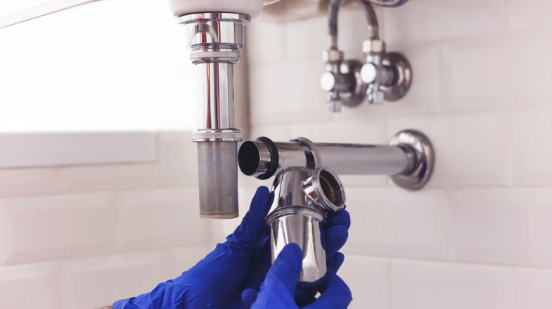
The conversation about climate change and homes usually centers on energy efficiency, better insulation, solar panels, and heat pumps. What gets talked about far less is what increasingly extreme and erratic weather is quietly doing to the infrastructure beneath your floors and inside your walls.
Specifically, your drains and plumbing systems were engineered for a climate that, in many parts of North America, no longer reliably exists.
The Infrastructure Time Lag Problem
Most residential and commercial buildings in the United States were built to meet plumbing codes written decades ago, based on historical weather norms that assumed relatively predictable seasonal patterns. Freeze-thaw cycles were expected to occur within certain temperature ranges, during certain months. Rainfall intensity was modeled against averages that have since been dramatically exceeded.
Climate scientists call this the “infrastructure time lag,” the gap between how our built environment was designed and how the actual environment now behaves. And plumbing systems are particularly exposed to this gap, because they’re underground, inside walls, and largely invisible until they fail.
Here’s what this looks like in practice-
Temperature whiplash- Many regions are now experiencing sharp swings of unusual warmth followed by rapid hard freezes, rather than the gradual seasonal transitions pipes were built to handle. Pipes expand and contract with temperature changes. When those changes happen faster and more dramatically, the stress accumulates in ways that decades of slower seasonal shifts wouldn’t produce.
Rain intensity, not just volume- Older drainage systems were sized based on average rainfall rates. The trend toward shorter, more intense precipitation events, a month’s worth of rain in 48 hours, routinely overwhelms drainage capacity that would handle traditional rainfall patterns perfectly well. This is a municipal infrastructure issue that also shows up on private property as flash flooding, backed-up floor drains, and sewer line overloads.
Ground movement from drought cycles- Prolonged drought followed by heavy rain causes soil expansion and contraction that can shift older pipes, especially clay or cast-iron lines, off their original slope. A drain that worked fine for 30 years can develop a low spot, a “belly” from ground movement, creating a trap for debris and a slow-build clog that eventually becomes a backup.
What This Means for Homeowners in 2026
The practical implications aren’t abstract. They show up in specific, increasingly common service calls-
- Pipe bursts in unusual months- Plumbers across North America are reporting cold-weather pipe failures in months that historically wouldn’t have raised a flag because a weather pattern that used to mean “reliably above-freezing” no longer does.
- Drain system backups after heavy rains- The combination of overwhelmed municipal systems and private drainage that wasn’t designed for high-intensity rainfall creates backup risk even for homes that have never experienced it before.
- Accelerated pipe degradation- The cumulative stress of repeated freeze-thaw cycles that happen faster and more severely than a pipe was engineered to withstand shortens the effective lifespan of infrastructure, particularly in older homes.
For homeowners and property managers, this means the maintenance schedules and inspection timelines that worked reliably in the past are increasingly out of date, not because anything was done wrong, but because the conditions those schedules were built for have shifted.
Rethinking the Maintenance Calendar
Most standard plumbing maintenance guidance still follows a traditional seasonal model: winterize in fall, check for winter damage in spring, monitor for root growth in summer. That framework is still useful but it increasingly needs to be supplemented with event-driven check-ins rather than calendar-only ones.
After any unseasonably sharp temperature swing: Pipes that passed a fall inspection can be stressed by a February heat wave followed by a late freeze. A quick check for signs of cracking or joint separation after unusual weather events costs very little and catches problems before they become emergencies.
After any major rainfall event: Floor drains, sump systems, and main lines that handle exterior drainage should be verified to be flowing freely. A partial obstruction that didn’t matter in normal rain can cause a backup in a heavy event.
For older properties specifically: if your building was constructed before 1980, there’s a meaningful chance your drain lines are clay, cast iron, or early PVC materials that are more vulnerable to ground movement stress and temperature extremes than modern materials. A periodic camera inspection of main lines is worth building into the regular maintenance cycle, not just when something goes wrong.
For a professional assessment of how your drain system is holding up against current conditions, not just the ones your home was built for click here.
The Business Property Angle
For commercial operators, climate-related plumbing risk has an additional dimension: business continuity and insurance.
An increasing number of commercial property insurers are updating their policies and risk assessments to account for climate-related infrastructure vulnerability. Properties without documented maintenance histories and recent inspections are facing higher premiums and, in some cases, denial of claims on damage that could be characterized as resulting from deferred maintenance.
This is an emerging area, and the standards are still evolving but the direction is clear. Properties that can demonstrate proactive drainage and plumbing maintenance are in a meaningfully better position than those that wait for something to break.
The weather your building was designed for is changing. The maintenance approach that protected it for decades is due for an update. Getting ahead of that shift with professional inspection and a current maintenance plan is the kind of infrastructure investment that pays off in ways that are quietly significant until suddenly they’re dramatically significant.